Passer aux informations produits
1 de 1

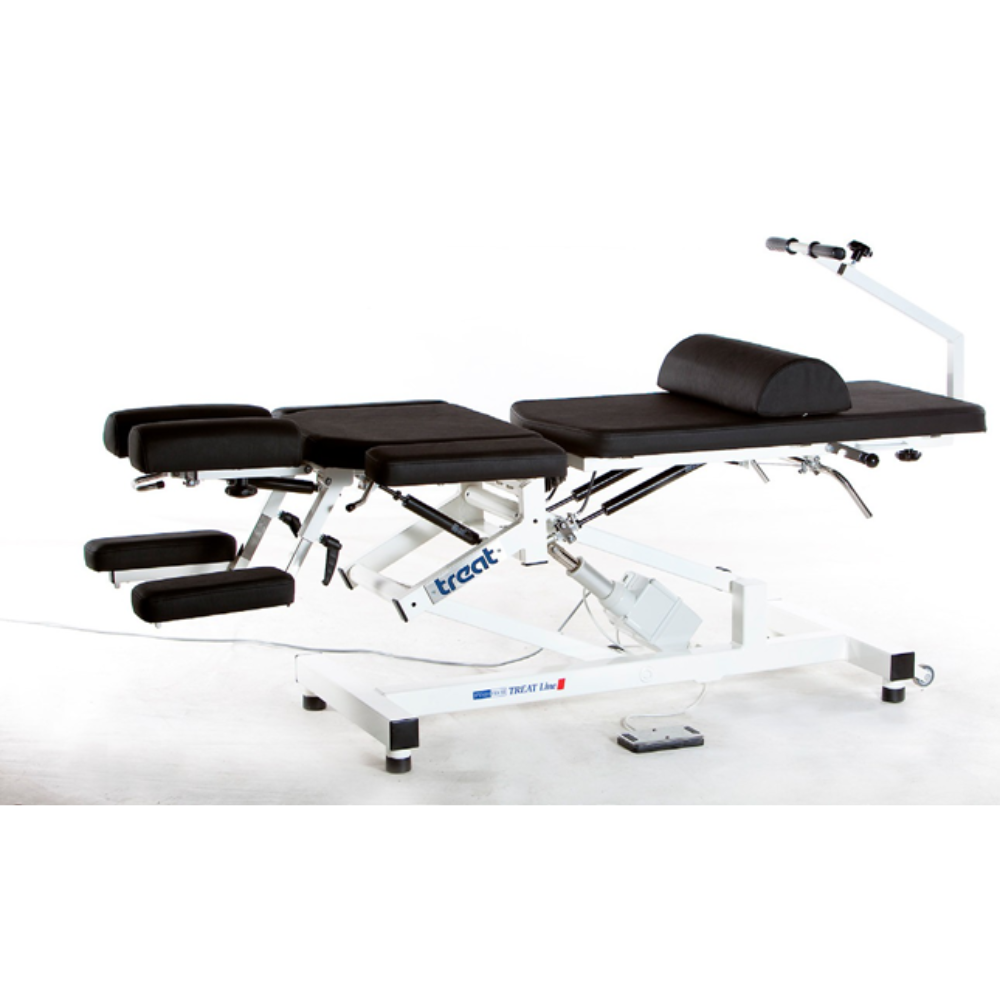
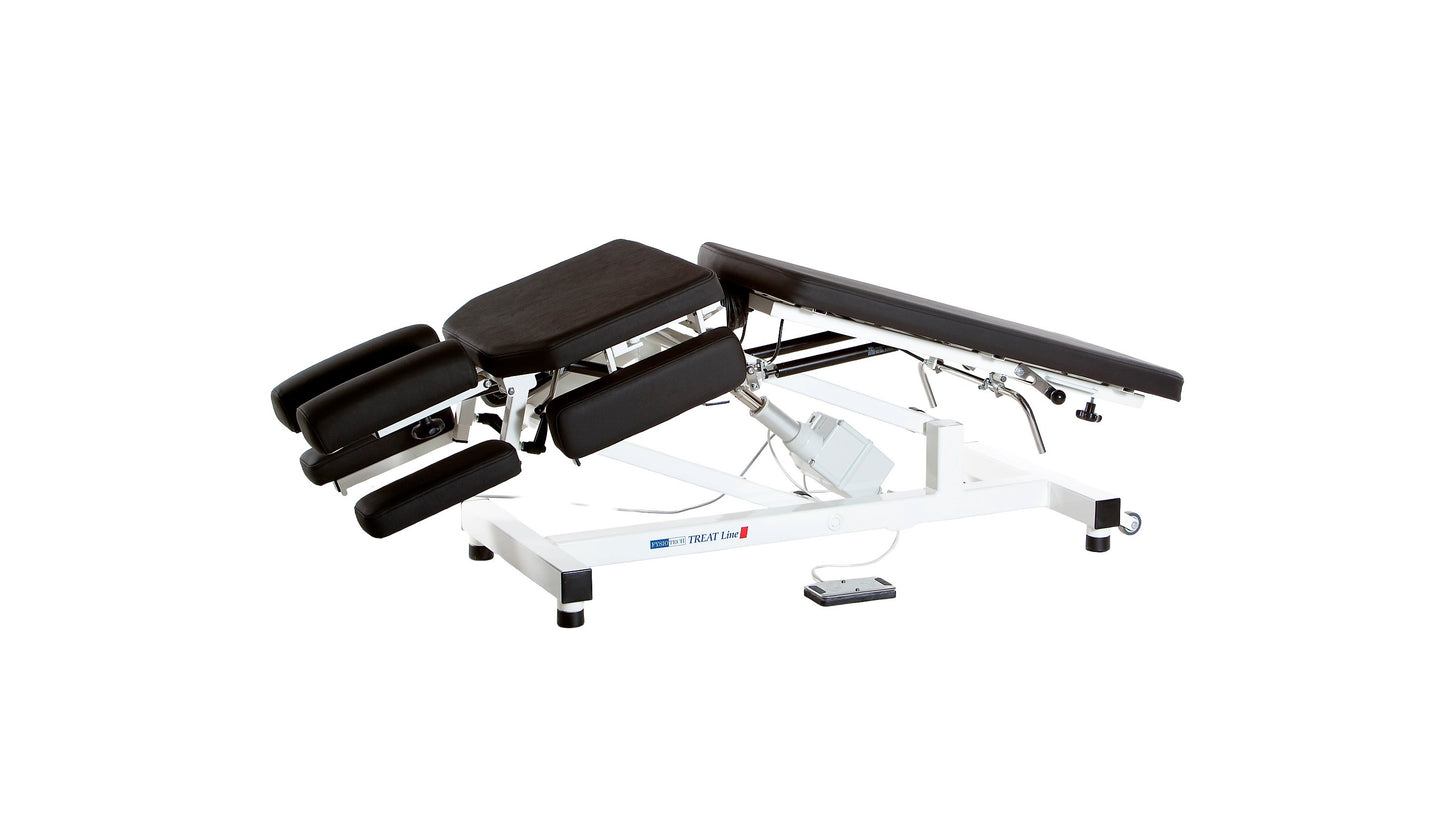
Table de Mobilisation Professionnelle | Structure X-Frame

Table de Mobilisation Professionnelle | Structure X-Frame

Prix habituel 3.750,00€ EUR
Prix habituel Prix promotionnel 3.750,00€ EUR
Promotion Épuisé
Taxes incluses.

La Table de Mobilisation Professionnelle a été conçue pour les cabinets de physiothérapie, les centres de rééducation, les cliniques de médecine du sport, les cabinets de chirothérapie ainsi que les professionnels de santé qui recherchent une table de traitement fiable pour un usage quotidien intensif.

Qu’il s’agisse de thérapie manuelle, de techniques de mobilisation articulaire, de rééducation des blessures sportives, de massage thérapeutique ou d’évaluations musculo-squelettiques, cette table offre la stabilité, le confort et la polyvalence nécessaires pour réaliser des traitements efficaces en toute confiance.

Les patients bénéficient d’une installation confortable et sécurisée tout au long de la séance, tandis que les thérapeutes profitent d’un accès optimal et d’un positionnement simplifié. Le réglage électrique de la hauteur permet d’adapter rapidement la table à la position de travail idéale, contribuant ainsi à réduire les contraintes exercées sur le dos, les épaules et les mains pendant la journée.

Grâce à ses différentes sections réglables, il est facile de positionner précisément les patients pour une grande variété de traitements, d’examens et de protocoles de rééducation. Sa structure robuste garantit une excellente stabilité lors des manipulations, des mobilisations et des autres techniques thérapeutiques réalisées manuellement.

Afficher tous les détails

Les avantages pour les professionnels

  • Idéale pour la physiothérapie, la rééducation fonctionnelle, la chirothérapie, l’ostéopathie et la médecine du sport
  • Réglage électrique de la hauteur pour une meilleure ergonomie de travail
  • Excellente stabilité pour les techniques de thérapie manuelle et de mobilisation
  • Positionnement précis du patient pour différents traitements et évaluations
  • Confort optimal pour le patient pendant les soins
  • Construction robuste adaptée à une utilisation clinique intensive
  • Favorise des traitements efficaces et un flux de travail optimisé


Une table de traitement professionnelle conçue pour les praticiens qui accordent de l’importance à l’ergonomie, au confort du patient, à la fiabilité et à la qualité des soins.

À qui s’adresse cette table de mobilisation ?

Pour les professionnels de santé et de la rééducation

  • Physiothérapeutes réalisant des techniques de mobilisation vertébrale, des manipulations HVLA (Haute Vélocité – Faible Amplitude) et des techniques de traction.
  • Professionnels de la médecine du sport prenant en charge des athlètes professionnels, de haut niveau et des sportifs de compétition dans toutes les disciplines.
  • Chiropracteurs recherchant une table de manipulation certifiée avec une capacité de charge documentée pour une utilisation clinique quotidienne.
  • Ostéopathes pratiquant des techniques des tissus mous, des techniques articulatoires et des manipulations HVLA sur l’ensemble de la colonne vertébrale.
  • Spécialistes de la rééducation orthopédique nécessitant un positionnement précis des patients après une intervention chirurgicale ou une blessure.
  • Thérapeutes manuels traitant des patients bariatriques ou des personnes de forte corpulence nécessitant une table stable, robuste et sécurisée.


Conçue pour les environnements cliniques exigeants où la stabilité, l’ergonomie, le confort du patient et la précision du positionnement sont essentiels à la réussite des traitements et des protocoles de rééducation.

FAQ

What makes this table different from a standard physiotherapy treatment bed?

The fundamental difference is engineering intent. Standard treatment beds are general-purpose furniture designed for examination and basic positioning. The Professional Mobilisation Table is a clinical precision instrument designed specifically for manual therapy manipulation. The X Frame provides vertical-only height travel (no horizontal drift), the 220 kg SWL accommodates full-force manipulation on all patient populations, the pneumatic foot switch enables mid treatment height adjustment, and the double-hinged cervical head section enables exact positional locking for cervical manipulation. None of these features exist in standard treatment beds.

What is the X-Frame, and why does it matter clinically?

The X-Frame is the structural architecture of the table's height adjustment mechanism. Conventional scissor-lift tables introduce horizontal movement as the height changes - the patient moves slightly sideways as the table rises or falls. In manual therapy, any unintended patient movement changes the therapist's force vector and can cause patient bracing. The X Frame constrains movement to the vertical axis only: the patient remains stationary relative to the floor throughout height adjustment. This is essential for the accuracy of HVLA and graded mobilisation techniques.

What is the Safe Working Load, and why does 220 kg matter?

Safe Working Load (SWL) is the maximum weight for which the table's structural integrity is certified under dynamic loading – including the weight of the patient plus the additional forces applied by the therapist during manipulation. Standard treatment beds are typically rated at 120-150 kg. At 220 kg, this table accommodates professional rugby players (average 110-130 kg), sumo athletes, bariatric patients, and the full range of clinical populations, including the additional dynamic load of high-force thrust techniques.

How does the pneumatic foot switch work during treatment?

The foot switch controls the electric height mechanism. During active treatment, with both hands in contact with the patient, the therapist can press the foot switch to raise or lower the table height without removing hands from the patient or interrupting technique. This is clinically valuable for gravity-assisted mobilisation sequences, where the table height is lowered during a technique to add gravitational traction through the patient's hanging limb, and for ergonomic adjustments when the therapist changes position during a multi-segment treatment session.

What is the U-shaped face aperture, and how does it differ from a standard facehole?

A standard face hole (circular aperture) applies pressure to the forehead, orbital ridge, and cheekbones when the face rests in it. This compression increases intraocular pressure, uncomfortable and potentially harmful during extended prone sessions. The U-shaped aperture contacts only the forehead and chin, leaving the eyes, nose, and mouth completely unobstructed. Breathing is unrestricted. Intraocular pressure is not elevated. This makes extended prone treatment sessions (30-45 minutes for thoracic work) genuinely comfortable for the patient, improving compliance and enabling longer treatment windows.

What is the scapular protocol, and why do adjustable armrests matter?

The Scapular Protocol is a positioning technique used before upper thoracic manipulation: the armrests are lowered to allow the patient's arms to hang below the table surface. This drops the shoulder girdle into protraction- relaxing the Rhomboids, middle Trapezius, and Serratus Anterior that overlie the upper thoracic spine. With this musculature relaxed, the T1–T5 facet joints become more accessible for mobilisation and manipulation. Fixed or absent armrests make this protocol impossible to achieve without patient effort, which reintroduces muscle tension and defeats the purpose.

What does 'Trendelenburg position' mean on this table?

Trendelenburg positioning places the patient with the feet higher than the head- achieved on this table by raising the foot section angle. Clinically, it increases venous return from the lower extremities to the central circulation. It is used post-treatment for patients with vascular compromise, oedematous lower limbs, or orthostatic hypotension, and as a recovery position after procedures where the patient may experience post-treatment vasovagal response (dizziness, light-headedness).

What is the 'lumbar lock' position?

The lumbar lock is achieved by flexing the hips to approximately 90 degrees via the back section angle. At this hip flexion angle, the lumbar facet joints become compacted, effectively 'locking' the lumbar segments against rotation and extension. Therapists use this position when they need to apply traction or mobilisation to the thoracic spine without the lumbar spine moving in response. It is also a protective position for patients with lumbar pathology during techniques that might otherwise stress the lumbar segment.

What type of upholstery is used and can it withstand clinical cleaning?

The upholstery is medical-grade biocompatible vinyl, a material specifically selected for resistance to massage oils, alcohol-based disinfectants, chlorine solutions, and repeated wiping. It does not degrade or crack with standard clinical cleaning protocols. It is not foam-backed standard vinyl, which absorbs disinfectant and degrades. The biocompatible classification means it has been tested for contact sensitivity, important for patients with latex or chemical sensitivities.

Contactez-Nous pour Votre Achat