Zu Produktinformationen springen
1 von 1

Professionelle Mobilisationsliege | X-Rahmen-System

Professionelle Mobilisationsliege | X-Rahmen-System

Normaler Preis 3.750,00€ EUR
Normaler Preis Verkaufspreis 3.750,00€ EUR
Sale Ausverkauft
Inkl. Steuern.

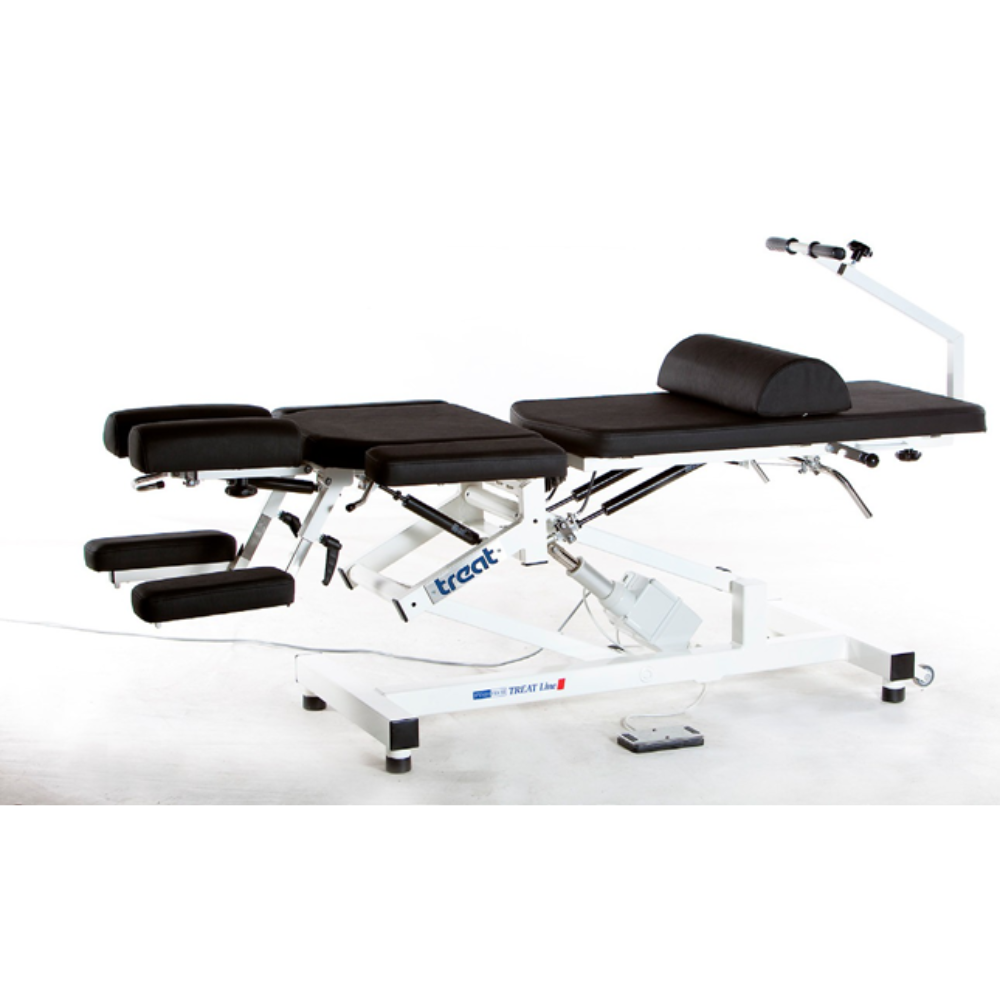
Die Professionelle Mobilisations-Behandlungsliege wurde für moderne Physiotherapiepraxen, Rehabilitationszentren, Sportmedizin, Chiropraktik und andere medizinische Einrichtungen entwickelt, die auf zuverlässige und hochwertige Behandlungsausstattung angewiesen sind.

Ob manuelle Therapie, Mobilisationstechniken, Sportrehabilitation, Massagebehandlungen oder muskuloskelettale Untersuchungen – diese Behandlungsliege bietet die Stabilität, den Komfort und die Flexibilität, die für erfolgreiche Therapiesitzungen erforderlich sind.

Patienten profitieren von einer komfortablen und sicheren Lagerung während der Behandlung, während Therapeuten optimale Arbeitsbedingungen genießen. Die elektrische Höhenverstellung ermöglicht eine schnelle Anpassung an die ideale Arbeitshöhe und unterstützt eine ergonomische Körperhaltung. Dadurch können Rücken, Schultern und Hände auch bei einem hohen Patientenaufkommen entlastet werden.

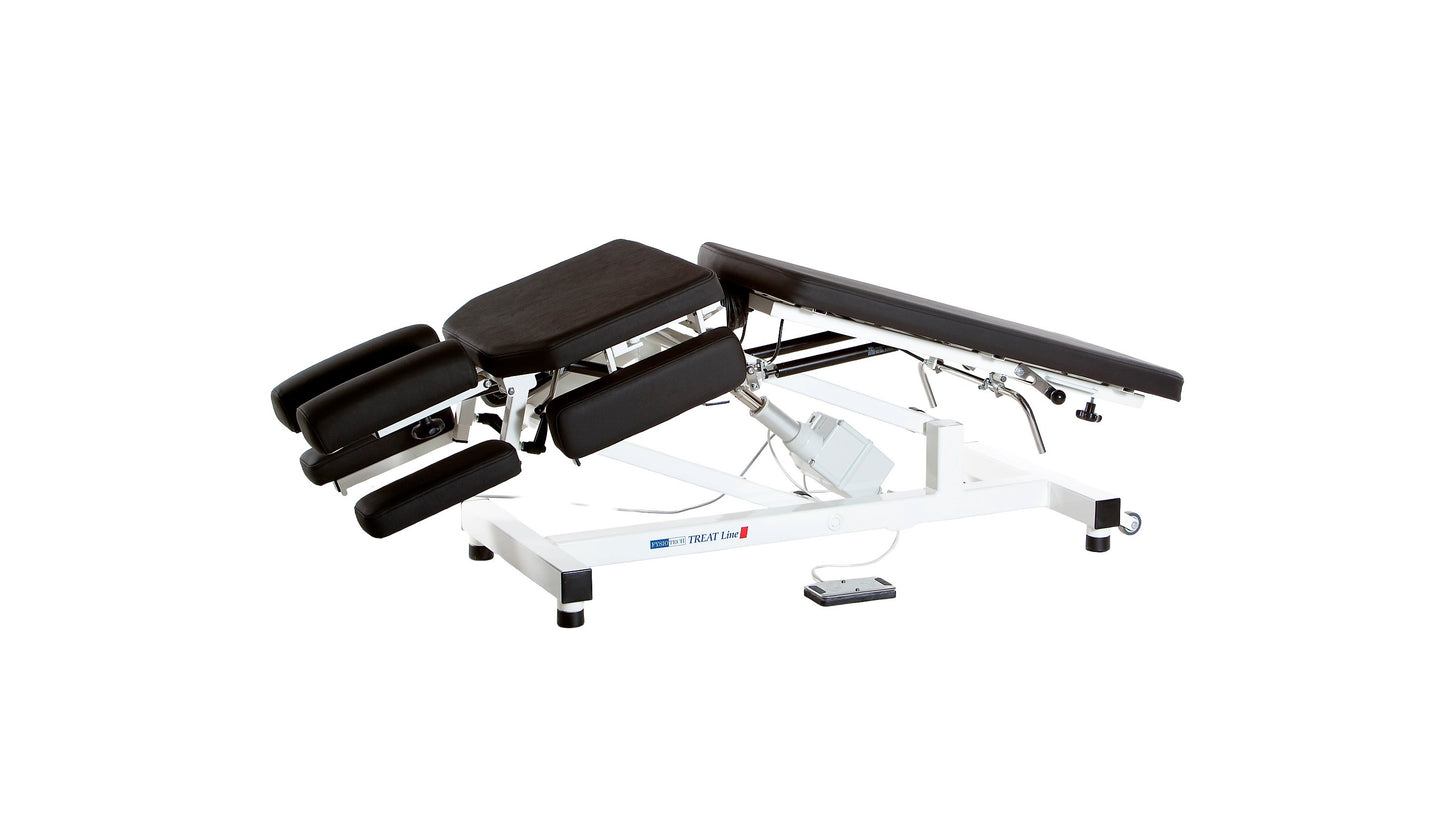
Die vielseitig verstellbaren Liegensegmente ermöglichen eine präzise Positionierung für unterschiedlichste Therapieformen und Untersuchungen. Gleichzeitig sorgt die stabile Konstruktion für einen sicheren Stand während manueller Techniken, Mobilisationen und anderer anspruchsvoller Behandlungen.

Vollständige Details anzeigen

Vorteile für den Praxisalltag

  • Ideal für Physiotherapie, Rehabilitation, Chiropraktik, Osteopathie und Sportmedizin
  • Elektrische Höhenverstellung für ergonomisches Arbeiten
  • Hohe Stabilität bei manueller Therapie und Mobilisationstechniken
  • Flexible Positionierung für unterschiedliche Behandlungsmethoden
  • Hoher Patientenkomfort während der Therapie
  • Robuste Bauweise für den täglichen Einsatz in stark frequentierten Praxen
  • Unterstützung effizienter und professioneller Behandlungsabläufe

Für wen ist diese Behandlungsliege geeignet?

Für medizinische Fachkräfte und Therapeuten

  • Physiotherapeuten, die Wirbelsäulenmobilisationen, HVLA-Manipulationen (High Velocity Low Amplitude) und Traktionstechniken durchführen.
  • Sportmedizinische Fachkräfte, die Profi-, Leistungs- und Breitensportler bei Verletzungsprävention, Rehabilitation und Leistungsoptimierung betreuen.
  • Chiropraktiker, die eine zertifizierte Manipulationsliege mit dokumentierter Belastbarkeit für tägliche Behandlungen benötigen.
  • Osteopathen, die Weichteiltechniken, artikulatorische Techniken und HVLA-Behandlungen an der gesamten Wirbelsäule durchführen.
  • Orthopädische Rehabilitationsspezialisten, die eine präzise Patientenlagerung nach Operationen oder Verletzungen benötigen.
  • Manualtherapeuten, die regelmäßig Patienten mit höherem Körpergewicht oder großer Statur sicher und komfortabel behandeln.


Entwickelt für anspruchsvolle klinische Umgebungen, in denen Stabilität, Ergonomie, Patientenkomfort und präzise Positionierung entscheidend für erfolgreiche Behandlungsergebnisse sind.

FAQ

What makes this table different from a standard physiotherapy treatment bed?

The fundamental difference is engineering intent. Standard treatment beds are general-purpose furniture designed for examination and basic positioning. The Professional Mobilisation Table is a clinical precision instrument designed specifically for manual therapy manipulation. The X Frame provides vertical-only height travel (no horizontal drift), the 220 kg SWL accommodates full-force manipulation on all patient populations, the pneumatic foot switch enables mid treatment height adjustment, and the double-hinged cervical head section enables exact positional locking for cervical manipulation. None of these features exist in standard treatment beds.

What is the X-Frame, and why does it matter clinically?

The X-Frame is the structural architecture of the table's height adjustment mechanism. Conventional scissor-lift tables introduce horizontal movement as the height changes - the patient moves slightly sideways as the table rises or falls. In manual therapy, any unintended patient movement changes the therapist's force vector and can cause patient bracing. The X Frame constrains movement to the vertical axis only: the patient remains stationary relative to the floor throughout height adjustment. This is essential for the accuracy of HVLA and graded mobilisation techniques.

What is the Safe Working Load, and why does 220 kg matter?

Safe Working Load (SWL) is the maximum weight for which the table's structural integrity is certified under dynamic loading – including the weight of the patient plus the additional forces applied by the therapist during manipulation. Standard treatment beds are typically rated at 120-150 kg. At 220 kg, this table accommodates professional rugby players (average 110-130 kg), sumo athletes, bariatric patients, and the full range of clinical populations, including the additional dynamic load of high-force thrust techniques.

How does the pneumatic foot switch work during treatment?

The foot switch controls the electric height mechanism. During active treatment, with both hands in contact with the patient, the therapist can press the foot switch to raise or lower the table height without removing hands from the patient or interrupting technique. This is clinically valuable for gravity-assisted mobilisation sequences, where the table height is lowered during a technique to add gravitational traction through the patient's hanging limb, and for ergonomic adjustments when the therapist changes position during a multi-segment treatment session.

What is the U-shaped face aperture, and how does it differ from a standard facehole?

A standard face hole (circular aperture) applies pressure to the forehead, orbital ridge, and cheekbones when the face rests in it. This compression increases intraocular pressure, uncomfortable and potentially harmful during extended prone sessions. The U-shaped aperture contacts only the forehead and chin, leaving the eyes, nose, and mouth completely unobstructed. Breathing is unrestricted. Intraocular pressure is not elevated. This makes extended prone treatment sessions (30-45 minutes for thoracic work) genuinely comfortable for the patient, improving compliance and enabling longer treatment windows.

What is the scapular protocol, and why do adjustable armrests matter?

The Scapular Protocol is a positioning technique used before upper thoracic manipulation: the armrests are lowered to allow the patient's arms to hang below the table surface. This drops the shoulder girdle into protraction- relaxing the Rhomboids, middle Trapezius, and Serratus Anterior that overlie the upper thoracic spine. With this musculature relaxed, the T1–T5 facet joints become more accessible for mobilisation and manipulation. Fixed or absent armrests make this protocol impossible to achieve without patient effort, which reintroduces muscle tension and defeats the purpose.

What does 'Trendelenburg position' mean on this table?

Trendelenburg positioning places the patient with the feet higher than the head- achieved on this table by raising the foot section angle. Clinically, it increases venous return from the lower extremities to the central circulation. It is used post-treatment for patients with vascular compromise, oedematous lower limbs, or orthostatic hypotension, and as a recovery position after procedures where the patient may experience post-treatment vasovagal response (dizziness, light-headedness).

What is the 'lumbar lock' position?

The lumbar lock is achieved by flexing the hips to approximately 90 degrees via the back section angle. At this hip flexion angle, the lumbar facet joints become compacted, effectively 'locking' the lumbar segments against rotation and extension. Therapists use this position when they need to apply traction or mobilisation to the thoracic spine without the lumbar spine moving in response. It is also a protective position for patients with lumbar pathology during techniques that might otherwise stress the lumbar segment.

What type of upholstery is used and can it withstand clinical cleaning?

The upholstery is medical-grade biocompatible vinyl, a material specifically selected for resistance to massage oils, alcohol-based disinfectants, chlorine solutions, and repeated wiping. It does not degrade or crack with standard clinical cleaning protocols. It is not foam-backed standard vinyl, which absorbs disinfectant and degrades. The biocompatible classification means it has been tested for contact sensitivity, important for patients with latex or chemical sensitivities.

Kontaktieren Sie uns für den Kauf