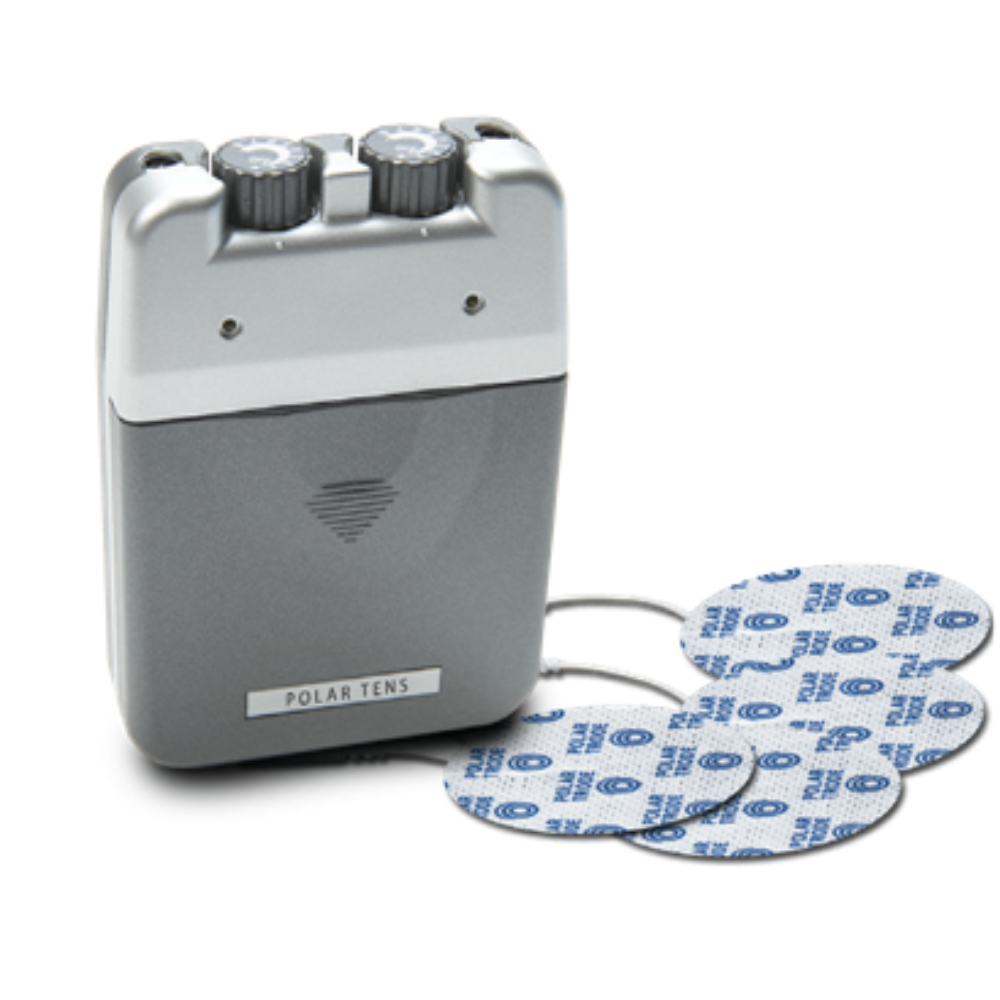
TENS a Doppio Canale | Polar TENS®
Impossibile caricare la disponibilità di ritiro
Il Polar TENS® (Stimolazione Nervosa Elettrica Transcutanea) è un elettrostimolatore progettato per la gestione del dolore senza farmaci e non invasiva, comodamente a casa.
Grazie a due meccanismi clinicamente riconosciuti – la Teoria del Gate Control e il rilascio di endorfine naturali – offre un sollievo dal dolore sia rapido che duraturo.
Ideale per il trattamento di:
- mal di schiena
- dolore al ginocchio
- artrite
- sciatalgia
- infortuni sportivi
- recupero post-operatorio
- dolore neuropatico
Il kit completo include:
- dispositivo TENS
- 4 elettrodi autoadesivi
- 2 cavi di collegamento
- batteria da 9V
- custodia per il trasporto
- manuale di istruzioni
- guida per il paziente
Una soluzione pratica, portatile e professionale per il sollievo quotidiano dal dolore.

What's Included in the Package
- Polar TENS® Dual Channel TENS unit.
- 4 × round self-adhesive electrode pads (reusable, re-sticky).
- 2 × lead wires (one per channel, each connects 2 electrodes).
- 1 × 9V battery (pre-installed and ready to use).
- Polar TENS carry bag (blue canvas with zip fastening).
- Patient Guide to Polar TENS - clinical usage guidance, programme settings, and safety information
Who Is This For?
For Patients
- Chronic back pain and CLBP sufferers seeking drug-free daily pain management.
- Knee osteoarthritis and joint pain patients requiring a non-pharmacological adjunct to physiotherapy.
- Athletes and sports participants managing DOMS, muscle strains, and tendinopathy.
- Post-surgical rehabilitation patients (ACL, TKR, arthroplasty) reducing opioid reliance.
- Neuropathic pain patients for whom NSAIDs provide insufficient relief.
- Sciatica and radicular pain sufferers seeking targeted nerve-pathway relief.
FAQ
How does a TENS machine relieve pain?
TENS (Transcutaneous Electrical Nerve Stimulation) relieves pain through two mechanisms. First, the gate control mechanism: high-frequency electrical pulses (80-120 Hz) stimulate large A beta sensory fibres that flood the spinal dorsal horn with non-painful signals, activating inhibitory interneurons that block incoming pain signals before they reach the brain. Second, the endorphin release mechanism: low-frequency pulses (2-10 Hz) trigger the pituitary gland and hypothalamus to release beta-endorphins and enkephalins – the body's natural opioid compounds – raising the systemic pain threshold for hours.
What types of pain does TENS help with?
TENS is clinically validated for: chronic low back pain (CLBP), knee osteoarthritis, acute sports injuries, post-surgical pain (ACL, knee/hip replacement, arthroscopy), neuropathic pain (diabetic neuropathy, phantom limb), sciatica and radicular pain, cervicogenic headache, shoulder and neck pain, tennis/golfer's elbow, Achilles tendinopathy, plantar fasciitis, DOMS and sports recovery, and fibromyalgia.
What is the difference between the two TENS frequency modes?
High-frequency mode (80-120 Hz) triggers the gate control mechanism – pain relief is rapid (within minutes) but stops when the machine is switched off. It is best for acute, breakthrough, or post-surgical pain. Low-frequency mode (2-10 Hz) triggers endorphin release – the onset takes 20-30 minutes, but the analgesic effect lasts for several hours after the session ends, due to the natural half-life of circulating endorphins. Best for chronic pain and rehabilitation.
What is the advantage of a dual-channel TENS machine?
A dual-channel machine allows you to treat two separate pain sites simultaneously using two independent sets of electrode pads. You can treat, for example, bilateral knee pain or neck and shoulder pain in one session. Alternatively, you can use all four electrodes on a single large muscle group in the 'bracketing' configuration, surrounding the pain region with the electrical field to achieve complete nerve field saturation – significantly more effective than a single two-electrode setup.
Can I use TENS while taking pain medication?
Yes. TENS is often used as an 'opioid sparing' adjunct that reduces the required dose of pharmaceutical analgesics, particularly post-surgically. Because TENS has no systemic drug interactions, it is safe to use alongside most pain medications. However, it does not replace prescribed medication without medical guidance. Consult your physician for personalised pain management planning.
How does TENS compare to pain medication?
TENS has no systemic side effects (no nausea, gastric irritation, renal strain, dependency, or sedation). It works locally and neurologically rather than systemically. Unlike NSAIDs, it can be used daily without risk of gastric ulceration. Unlike opioids, it has no dependency potential. Clinical research shows TENS reduces post-operative opioid consumption, extends time between analgesic doses, and enables patients with chronic pain to participate more effectively in physiotherapy.